
Abstract
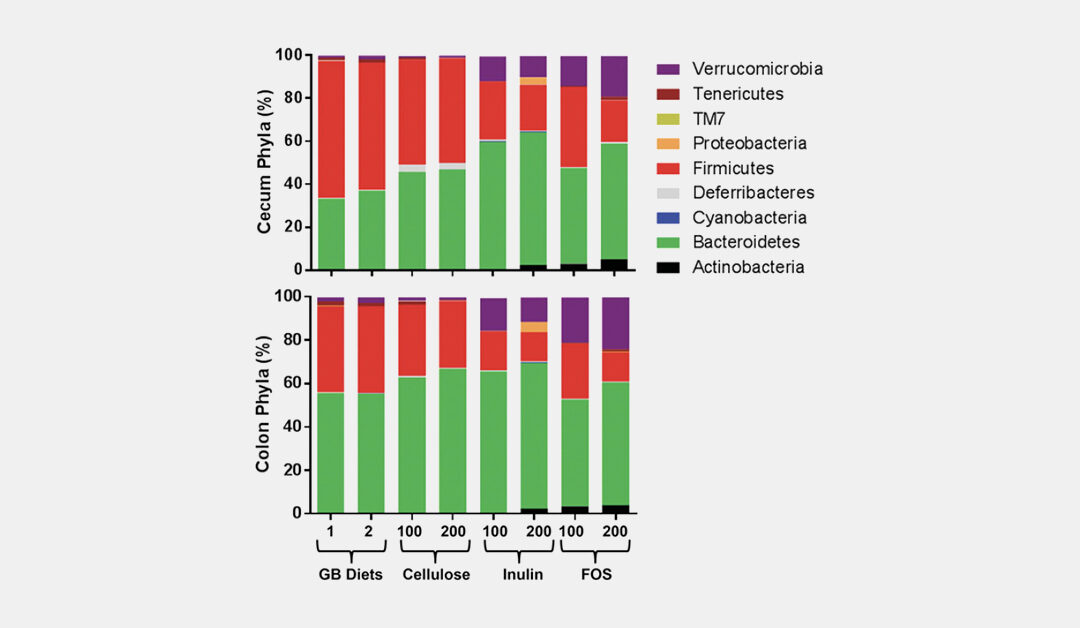
Effects of Rodent Diet Choice and Fiber Type on Data Interpretation of Gut Microbiome and Metabolic Disease Research
References
- Adam, C. L., Williams, P. A., Garden, K. E., Thomson, L. M., & Ross, A. W. (2015). Dose-dependent effects of a soluble dietary fibre(pectin) on food intake, adiposity, gut hyper-trophy and gut satiety hormone secretion inrats. PLoS ONE, 10(1), 1–14. doi: 10.1371/journal.pone.0115438.
- Benoit, B., Plaisanci´ e, P., Awada, M., G´ elo¨ en, A., Estienne, M., Capel, F., . . . Michalski, M.-C.(2013). High-fat diet action on adiposity, inflam-mation, and insulin sensitivity depends on the control low-fat diet. Nutrition Research, 33(11),952–960. doi:10.1016/j.nutres.2013.07.017.
- Bieri, J., Stoewsand, G., Briggs, G., Phillips, R.,Woodard, J., & Knapka, J. J. (1977). Report of the American Institute of Nutrition ad hoc committee on standards for nutritional studies. Journal of Nutrition, 107(7), 1340–1348. doi:10.1093/jn/107.7.1340.
- Brooks, L., Viardot, A., Tsakmaki, A., Stolarczyk, E., Howard, J. K., Cani, P. D., . . . Bewick, G. A. (2017). Fermentable carbohydrate stimulates FFAR2-dependent colonic PYY cell expansion to increase satiety. Molecular Metabolism, 6(1), 48–60. doi: 10.1016/j.molmet.2016.10.011.
- Cani, P. D., Amar, J., Iglesias, M. A., Poggi, M., Knauf, C., Bastelica, D., . . . Burcelin, R.(2007). Metabolic endotoxemia initiates obesity and insulin resistance. Diabetes, 56(7), 1761–1772. doi: 10.2337/db06-1491.
- Chassaing, B., Miles-Brown, J., Pellizzon, M., Ul-man, E., Ricci, M., Zhang, L., . . . Gewirtz, A. T. (2015). Lack of soluble fiber drives diet-induced adiposity in mice. American Journal of Physiology. Gastrointestinal and Liver Physiology, 309(7), G528–541. doi:10.1152/ajpgi.00172.2015.
- Chassaing, B., Vijay-Kumar, M., & Gewirtz, A.T. (2017). How diet can impact gut microbiota to promote or endanger health. Current Opinion in Gastroenterology, 33(6), 417–421. doi:10.1097/MOG.0000000000000401.
- Chateigner-Boutin, A. L., Bouchet, B., Alvarado, C., Bakan, B., & Guillon, F. (2014). The wheat grain contains pectic domains exhibiting specific spatial and development-associated distribution. PLoS ONE, 9(2), e89620. doi:10.1371/journal.pone.0089620.
- Cockell, K. A., & Belonje, B. (2004). Nephrocal-cinosis caused by dietary calcium: Phosphorus imbalance in female rats develops rapidly and is irreversible. The Journal of Nutrition, 134(3),637–640. doi: 10.1093/jn/134.3.637.
- Cockell, K. A., L’Abb´ e, M. R., & Belonje, B.(2002). The concentrations and ratio of dietary calcium and phosphorus influence development of nephrocalcinosis in female rats. The Journal of Nutrition, 132(2), 252–256. doi:10.1093/jn/132.2.252.
- Codex Alimentarius (2013). Guidelines on Nutrition Labelling. Cac/Gl 2-1985, 53(9), 1689–1699. https://doi.org/10.1017/CBO9781107415324.004.
- Desai, M. S., Seekatz, A. M., Koropatkin, N.M., Kamada, N., Hickey, C. A., Wolter, M., . . . Martens, E. C. (2016). A dietary fiber-deprived gut microbiota degrades the colonic mucus barrier and enhances pathogen susceptibility. Cell, 167, 1339–1353. doi:10.1016/j.cell.2016.10.043.
- Duffy, P. H., Lewis, S. M., Mayhugh, M. A., Mc-cracken, A., Thorn, B. T., Reeves, P. G., . . .Feuers, R. J. (2002). Nutrition and aging effect of the AIN-93M purified diet and dietary restriction on survival in sprague-dawley rats: Implications for chronic studies 1. The Journal of Nutrition, 132, 101–107. doi: 10.1093/jn/132.1.101.
- Fodde, R., Schmitt, M., Schewe, M., & Augenlicht, L. H. (2017). Fodde Hepatobiliary surgery 2017 Commentary Modelling Western dietary habits in the mouse. HepatoBiliary Surgery and Nutrition, 6(2), 138–140. doi:10.21037/hbsn.2017.01.20.
- Freedman, L. P., Cockburn, I. M., & Simcoe, T.S. (2015). The economics of reproducibility in preclinical research. PLoS Biology, 13(6), e1002165. doi: 10.1371/journal.pbio.1002165.
- Greenman, D., Oller, W., Littlefield, N., & Nelson, C. (1980). Commercial laboratory animal diets: Toxicant and nutrient variability. Journal of Toxicology and Environmental Health, 6, 235–246. doi: 10.1080/15287398009529848.
- Holscher, H. D. (2017). Dietary fiber and prebiotics and the gastrointestinal microbiota. Gut Microbes, 8(2), 172–184. doi:10.1080/19490976.2017.1290756.
- Hrncir, T., Stepankova, R., Kozakova, H., Hudcovic, T., & Tlaskalova-Hogenova, H.(2008). Gut microbiota and lipopolysaccharide content of the diet influence development of regulatory T cells: Studies in germ-free mice. BMC Immunology, 9, 65. https://doi.org/10.1186/1471-2172-9-65.
- Ikarashi, N., Toda, T., Okaniwa, T., Ito, K., Ochiai, W., & Sugiyama, K. (2011). Antiobesity and anti-diabetic effects of acacia polyphenol in obese diabetic KKAy mice fed high-fat diet. Evidence-Based Complementary and Alternative Medicine, 2011(15), 1–10. https://doi.org/10.1093/ecam/nep241. Institute for Laboratory Animal Research. (2011). Guidance for the description of animal research in scientific publications guidance for the description of animal research in scientific publications. (National Research Council, Ed.).
- Washington, D.C.: The National Academies Press. https://doi.org/doi:10.17226/13241. Jensen, M. N., & Ritskes-Hoitinga, M. (2007). How isoflavone levels in common rodent diets can interfere with the value of animal models and with experimental results. Laboratory Animal, 41(1), 1–18. doi:10.1258/002367707779399428.
- Kalia, S., Dufresne, A., Cherian, B. M., Kaith, B.S., Av´ erous, L., Njuguna, J., & Nassiopoulos, E.(2011). Cellulose-based bio- and nanocomposites: A review. International Journal of Polymer Science, 2011, 35. doi: 10.1155/2011/837875.
- Kilkenny, C., Browne, W. J., Cuthill, I. C.,Emerson, M., & Altman, D. G. (2010). Improving Bioscience Research Reporting: The ARRIVE Guidelines for Reporting Animal Research. PLoS Biology, 8(6), 6–10. https://doi.org/10.1371/journal.pbio.1000412.
- Kozul, C. D., Nomikos Athena, P., Hampton, T.H., Warnke, L. A., Gosse, J. A., Davey, J. C.,. . . Hamilton Joshua, W. (2008). Laboratory diet profoundly alters gene expression and confounds genomic analysis in mouse liver and lung. Chemico-Biological Interactions, 173(2), 129–140. doi: 10.1016/j.cbi.2008.02.008.
- Laukens, D., Brinkman, B. M., Raes, J., De Vos, M., & Vandenabeele, P. (2015). Heterogeneity of the gut microbiome in mice: Guidelines for optimizing experimental design. FEMS Microbiology Reviews, 40(1), 117–132. doi: 10.1093/femsre/fuv036.
- Levrat, M.-A., R´em´ esy, C., & Demign´ e, C.(1991). High propionic acid fermentations and mineral accumulation in the cecum of rats adapted to different levels of inulin. The Journal of Nutrition, 121(11), 1730–1737. doi:10.1093/jn/121.11.1730.
- Liu, T.-W., Cephas, K. D., Holscher, H. D., Kerr, K. R., Mangian, H. F., Tappenden, K. A., & Swanson, K. S. (2016). Nondigestible fructans alter gastrointestinal barrier function, gene expression, histomorphology, and the microbiota profiles of diet-induced obese C57BL/6J Mice. Journal of Nutrition, 146(5), 949–956. doi:10.3945/jn.115.227504.
- Mesnage, R., Defarge, N., Rocque, L. M., De Vendˆ omois, J. S., & S´ eralini, G. E. (2015). Laboratory rodent diets contain toxic levels of environmental contaminants: Implications for regulatory tests. PLoS ONE, 10(7), e0128429. doi:10.1371/journal.pone.0128429.
- Neyrinck, A., Van H´ ee, E. V., Piront, N.,De Backer, F., Toussaint, O., Cani, P., & Delzenne, N. (2012). Wheat-derived arabinoxylan oligosaccharides with prebiotic effect increase satietogenic gut peptides and reduce metabolic endotoxemia in diet-induced obese mice. Nutrition and Diabetes, 2, e28. doi:10.1038/nutd.2011.24.
- Pellizzon, M. A., & Ricci, M. R. (2018). The common use of improper control diets in diet-induced metabolic disease research confounds data interpretation: The fiber factor. Nutrition & Metabolism, 15(1), 3. doi:10.1186/s12986-018-0243-5.
- Pellizzon, M. A., Ricci, M. R., Compton, D. S.,Rocheford, E. C., Dionysius, A. A., Koval,J. C., & Ulman, E. A. (2015). Replacement of Insoluble Fiber (IF) With Soluble Fiber (SF) in a Purified-Ingredient Open Standard Diet Increases Cecal and Colonic Weights Similar to Grain-Based Chows (Chows) and Distinctly Alters Microbiota in Weanling Male C57BL/6N Mice. In Gastroenterology (p. 148(4), Supplement 1, S-540). https://doi.org/10.1016/S0016-5085(15)31812-6.
- Reeves, P. G., Nielson, F. H., & Fahey, G. C. (1993). AIN-93 purified diets for laboratory rodents: Final report of the american institute of nutrition ad hoc writing committee on the reformulation of the AIN-76A Rodent Diet. Journal of Nutrition, 123, 939–951. doi: 10.1093/jn/123.11.1939.
- Rendina-Ruedy, E., & Smith, B. J. (2016). Methodological considerations when studying the skeletal response to glucose intolerance using the diet-induced obesity model. BoneKEy Reports, 5, 845. doi: 10.1038/bonekey.2016.71.
- Ricci, M., & Ulman, E. (2005). Laboratory animal diets: A critical part of your in vivo research. Animal Laboratory News, 4(6), 1–6. Retrieved from https://www.alnmag.com/article/laboratory-animal-diets-critical-part-your-vivo-research.
- Rutten, A. A. J. J. L., & de Groot, A. P. (1992). Comparison of cereal-based diet with purified diet by short-term feeding studies in rats, mice and hamsters, with emphasis on toxicity charac- teristics. Food and Chemical Toxicology, 30(7),601–610. doi: 10.1016/0278-6915(92)90194-P.
- Stevenson, L., Phillips, F., O’sullivan, K., & Walton, J. (2012). Wheat bran: Its composition and benefits to health, a European perspective. International Journal of Food Sciences and Nutrition, 63(8), 1001–1013. doi:10.3109/09637486.2012.687366.
- Thigpen, J. E., Setchell, K. D., Kissling, G.E., Locklear, J., Caviness, G. F., Whiteside, T., . . . Grant, M. (2013). The estrogenic content of rodent diets, bedding, cages, and water bottles and its effect on bisphenol a studies. Journal of the American Association for Laboratory Animal Science: JAALAS, 52(2), 130–141. Retrieved from https://www.ncbi.nlm.nih.gov/pubmed/23562095.
- Thigpen, J. E., Setchell, K. D. R., Padilla-Banks, E.,Haseman, J. K., Saunders, H. E., Caviness, G. F.,. . . Forsythe, D. B. (2007). Variations in phytoestrogen content between different mill dates of the same diet produces significant differences in the time of vaginal opening in CD-1 mice and F344 rats but not in CD Sprague-Dawley rats. Environmental Health Perspectives, 115(12), 1717–1726. doi: 10.1289/ehp.10165.
- Thigpen, J., Setchell, K., Ahlmark, K., Lock-lear, J., Spahr, T., Caviness, G., . . .Forsythe, D. (1999). Phytoestrogen content of purified, open- and closed-formula laboratory animal diets. Laboratory Animal Sciences, 49(5), 530–536. Retrieved from https://www.ncbi.nlm.nih.gov/pubmed/10551455.
- Vitaglione, P., Napolitano, A., & Fogliano, V.(2008). Cereal dietary fibre: A natural functional ingredient to deliver phenolic compounds into the gut. Trends in Food Science and Technology, 19(9), 451–463. doi:10.1016/j.tifs.2008.02.005.
- Warden, C. H., & Fisler, J. S. (2008). Comparisons of diets used in animal models of high fat feeding. Cell Metabolism, 7(4), 277. doi:10.1016/j.cmet.2008.03.014.
- Wise, A., & Gilburt, D. J. (1980). The variability of dietary fibre in laboratory animal diets and its relevance to the control of experimental conditions. Food and Cosmetics Toxicology, 18, 643–648. doi: 10.1016/S0015-6264(80)80013-7.
- Wise, A. (1982). Interaction of diet and toxicity the future role of purified diet in toxicological research. Archives of Toxicology, 50(3-4), 287–299. doi: 10.1007/BF00310861.
- Yang, J., Bindels, L., Munoz, R. R. S., Mart´ınez, I., Walter, J., Ramer-Tait, A., & Rose, D. J. (2016). Disparate metabolic responses in mice fed a high-fat diet supplemented with maize-derived non-digestible feruloylated oligo- and polysaccharides are linked to changes in the gut microbiota. Plos One, Retrieved from https://doi.org/doi:10.1371.
- Yang, J., Maldonado-G´ omez, M. X., Hutkins, R. W., & Rose, D. J. (2014). Production and in vitro fermentation of soluble, non-digestible, feruloylated oligo- and polysaccharides from maize and wheat brans. Journal of Agricultural and Food Chemistry, 62(1), 159–166. doi:10.1021/jf404305y.
- Zou, J., Chassaing, B., Singh, V., Pellizzon, M., Ricci, M., Fythe, M. D., . . . Gewirtz, A. T. (2017). Fiber-mediated nourishment of gut microbiota protects against diet induced obesity by restoring il-22-mediated colonic health. Cell Host and Microbe, https://doi.org/10.1016/j.chom.2017.11.003.