
Abstract
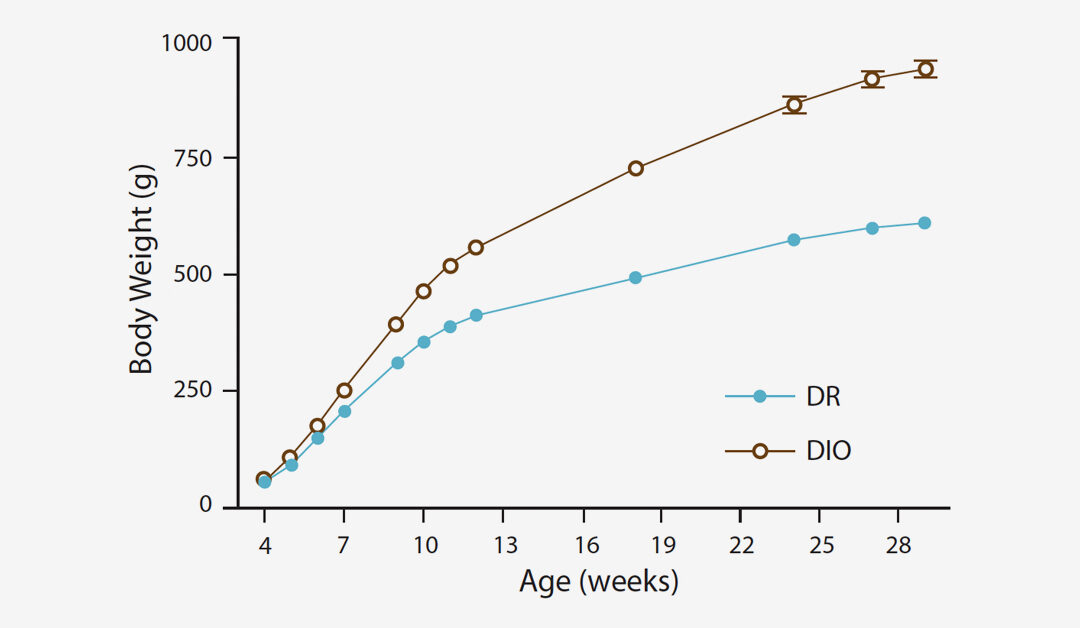
Genetic and environmental factors play a role in the development of obesity, and diet is one of the main environmental factors that contribute to obesity and its related metabolic diseases. Human studies have shown that increased fat intake is associated with body weight gain which can lead to obesity and other related metabolic diseases. As such, animal rodent models are useful tools to determine the mechanistic aspects of obesity and to develop therapeutic approaches as they will readily gain weight when fed high-fat diets (1, 2). Here, we discuss important factors to consider when designing a diet-induced obesity study using animal models.
References
- Buettner, R., Scholmerich, J. & Bollheimer, L.C., 2007. High-fat diets: modeling the metabolic disorders of human obesity in rodents. Obesity (Silver Spring), 15, pp.798–808.
- Van Heek, M., Compton, D.S., France, C.F., Tedesco, R.P., Fawzi, A.B., Graziano, M.P., Sybertz, E.J., Strader, C.D. & Davis, H.R. Jr., 1997. Diet-induced obese mice develop peripheral, but not central, resistance to leptin. The Journal of Clinical Investigation, 99, pp.385–390.
- Warden, C.H. & Fisler, J.S., 2008. Comparisons of diets used in animal models of high-fat feeding. Cell Metabolism, 7, p.277.
- Cederroth, C.R., Vinciguerra, M., Kuhne, F., Madani, R., Doerge, D.R., Visser, T.J., Foti, M., Rohner-Jeanrenaud, F., Vassalli, J.D. & Nef, S., 2007. A phytoestrogen-rich diet increases energy expenditure and decreases adiposity in mice. Environmental Health Perspectives, 115, pp.1467–1473.
- Jiang, L., Wang, Q., Yu, Y., Zhao, F., Huang, P., Zeng, R., Qi, R.Z., Li, W. & Liu, Y., 2009. Leptin contributes to the adaptive responses of mice to high-fat diet intake through suppressing the lipogenic pathway. PLoS One, 4, e6884.
- Johnston, S.L., Souter, D.M., Tolkamp, B.J., Gordon, I.J., Illius, A.W., Kyriazakis, I. & Speakman, J.R., 2007. Intake compensates for resting metabolic rate variation in female C57BL/6J mice fed high-fat diets. Obesity (Silver Spring), 15, pp.600–606.
- Moschonas, D.P., Piperi, C., Korkolopoulou, P., Levidou, G., Kavantzas, N., Trigka, E.A., Vlachos, I., Arapostathi, C., Perrea, D., Mitropoulos, D., Diamanti-Kandarakis, E. & Papavassiliou, A.G., 2014. Impact of diet-induced obesity in male mouse reproductive system: The role of advanced glycation end product-receptor for advanced glycation end product axis. Experimental Biology and Medicine (Maywood), 239, pp.937–947.
- Marin, V., Rosso, N., Dal Ben, M., Raseni, A., Boschelle, M., Degrassi, C., Nemeckova, I., Nachtigal, P., Avellini, C., Tiribelli, C. & Gazzin, S., 2016. An animal model for the juvenile non-alcoholic fatty liver disease and non-alcoholic steatohepatitis. PLoS One, 11, e0158817.
- Bruce-Keller, A.J., White, C.L., Gupta, S., Knight, A.G., Pistell, P.J., Ingram, D.K., Morrison, C.D. & Keller, J.N., 2010. NOX activity in brain aging: exacerbation by high fat diet. Free Radical Biology and Medicine, 49(1), pp.22–30.
- Trevaskis, J.L., Griffin, P.S., Wittmer, C., Neuschwander-Tetri, B.A., Brunt, E.M., Dolman, C.S., Erickson, M.R., Napora, J., Parkes, D.G. & Roth, J.D., 2012. Glucagon-like peptide-1 receptor agonism improves metabolic, biochemical, and histopathological indices of nonalcoholic steatohepatitis in mice. American Journal of Physiology: Gastrointestinal and Liver Physiology, 302, pp.G762–G772.
- Ikemoto, S., Takahashi, M., Tsunoda, N., Maruyama, K., Itakura, H. & Ezaki, O., 1996. High-fat diet-induced hyperglycemia and obesity in mice: differential effects of dietary oils. Metabolism, 45, pp.1539–1546.
- Wang, H., Storlien, L.H. & Huang, X.F., 2002. Effects of dietary fat types on body fatness, leptin, and ARC leptin receptor, NPY, and AgRP mRNA expression. American Journal of Physiology: Endocrinology and Metabolism, 282, pp.E1352–E1359.
- Svahn, S.L., Grahnemo, L., Pálsdóttir, V., Nookaew, I., Wendt, K., Gabrielsson, B., Schéle, E., Benrick, A., Andersson, N., Nilsson, S., Johansson, M.E. & Jansson, J.O., 2015. Dietary polyunsaturated fatty acids increase survival and decrease bacterial load during septic Staphylococcus aureus infection and improve neutrophil function in mice. Infection and Immunity, 83, pp.514–521.
- Buettner, R., Parhofer, K.G., Woenckhaus, M., Wrede, C.E., Kunz-Schughart, L.A., Scholmerich, J. & Bollheimer, L.C., 2006. Defining high-fat-diet rat models: metabolic and molecular effects of different fat types. Journal of Molecular Endocrinology, 36, pp.485–501.
- Ford, N.A., Rossi, E.L., Barnett, K., Yang, P., Bowers, L.W., Hidaka, B.H., Kimler, B.F., Carlson, S.E., Shureiqi, I., deGraffenried, L.A., Fabian, C.J. & Hursting, S.D., 2015. Omega-3-acid ethyl esters block the protumorigenic effects of obesity in mouse models of postmenopausal basal-like and claudin-low breast cancer. Cancer Prevention Research (Philadelphia), 8, pp.796–806.
- Hanke, D., Zahradka, P., Mohankumar, S.K., Clark, J.L. & Taylor, C.G., 2013. A diet high in α-linolenic acid and monounsaturated fatty acids attenuates hepatic steatosis and alters hepatic phospholipid fatty acid profile in diet-induced obese rats. Prostaglandins, Leukotrienes and Essential Fatty Acids, 89, pp.391–401.
- Clarke, S.D., 2000. Polyunsaturated fatty acid regulation of gene transcription: a mechanism to improve energy balance and insulin resistance. British Journal of Nutrition, 83, pp.S59–S66.
- Giudetti, A.M. & Cagnazzo, R., 2012. Beneficial effects of n-3 PUFA on chronic airway inflammatory diseases. Prostaglandins and Other Lipid Mediators, 99, pp.57–67.
- Liu, H.Q., Qiu, Y., Mu, Y., Zhang, X.J., Liu, L., Hou, X.H., Zhang, L., Xu, X.N., Ji, A.L., Cao, R., Yang, R.H. & Wang, F., 2013. A high ratio of dietary n-3/n-6 polyunsaturated fatty acids improves obesity-linked inflammation and insulin resistance through suppressing activation of TLR4 in SD rats. Nutrition Research, 33, pp.849–858.
- Hsueh, H.W., Zhou, Z., Whelan, J., Allen, K.G., Moustaid-Moussa, N., Kim, H. & Claycombe, K.J., 2011. Stearidonic and eicosapentaenoic acids inhibit interleukin-6 expression in ob/ob mouse adipose stem cells via Toll-like receptor-2-mediated pathways. The Journal of Nutrition, 141, pp.1260–1266.
- Camuesco, D., Gálvez, J., Nieto, A., Comalada, M., Rodríguez-Cabezas, M.E., Concha, A., Xaus, J. & Zarzuelo, A., 2005. Dietary olive oil supplemented with fish oil, rich in EPA and DHA (n-3) polyunsaturated fatty acids, attenuates colonic inflammation in rats with DSS-induced colitis. The Journal of Nutrition, 135, pp.687–694.
- Caesar, R., Tremaroli, V., Kovatcheva-Datchary, P., Cani, P.D. & Bäckhed, F., 2015. Crosstalk between gut microbiota and dietary lipids aggravates WAT inflammation through TLR signaling. Cell Metabolism, 22, pp.658–668.
- Rossmeisl, M., Rim, J.S., Koza, R.A. & Kozak, L.P., 2003. Variation in type 2 diabetes-related traits in mouse strains susceptible to diet-induced obesity. Diabetes, 52, pp.1958–1966.
- Surwit, R.S., Feinglos, M.N., Rodin, J., Sutherland, A., Petro, A.E., Opara, E.C., Kuhn, C.M. & Rebuffe-Scrive, M., 1995. Differential effects of fat and sucrose on the development of obesity and diabetes in C57BL/6J and A/J mice. Metabolism, 44, pp.645–651.
- Prpic, V., Watson, P.M., Frampton, I.C., Sabol, M.A., Jezek, G.E. & Gettys, T.W., 2002. Adaptive changes in adipocyte gene expression differ in AKR/J and SWR/J mice during diet-induced obesity. The Journal of Nutrition, 132, pp.3325–3332.
- Biga, P.R., Froehlich, J.M., Greenlee, K.J., Galt, N.J., Meyer, B.M. & Christensen, D.J., 2013. Gelatinases impart susceptibility to high-fat diet-induced obesity in mice. The Journal of Nutritional Biochemistry, 24, pp.1462–1468.
- Jiang, T., Wang, Z., Proctor, G., Moskowitz, S., Liebman, S.E., Rogers, T., Lucia, M.S., Li, J. & Levi, M., 2005. Diet-induced obesity in C57BL/6J mice causes increased renal lipid accumulation and glomerulosclerosis via a sterol regulatory element-binding protein-1c-dependent pathway. The Journal of Biological Chemistry, 280, pp.32317–32325.
- Gallou-Kabani, C., Vigé, A., Gross, M.S., Rabès, J.P., Boileau, C., Larue-Achagiotis, C., Tomé, D., Jais, J.P. & Junien, C., 2007. C57BL/6J and A/J mice fed a high-fat diet delineate components of metabolic syndrome. Obesity (Silver Spring), 15, pp.1996–2005.
- Neyrinck, A.M., Van Hée, V.F., Bindels, L.B., De Backer, F., Cani, P.D. & Delzenne, N.M., 2013. Polyphenol-rich extract of pomegranate peel alleviates tissue inflammation and hypercholesterolaemia in high-fat diet-induced obese mice: potential implication of the gut microbiota. British Journal of Nutrition, 109, pp.802–809.
- Pecoraro, N., Ginsberg, A.B., Warne, J.P., Gomez, F., la Fleur, S.E. & Dallman, M.F., 2006. Diverse basal and stress-related phenotypes of Sprague Dawley rats from three vendors. Physiology & Behavior, 89, pp.598–610.
- Lauterio, T.J., Bond, J.P. & Ulman, E.A., 1994. Development and characterization of a purified diet to identify obesity-susceptible and resistant rat populations. The Journal of Nutrition, 124, pp.2172–2178.
- Chang, S., Graham, B., Yakubu, F., Lin, D., Peters, J.C. & Hill, J.O., 1990. Metabolic differences between obesity-prone and obesity-resistant rats. American Journal of Physiology, 259, pp.R1103–R1110.
- Levin, B.E., Dunn-Meynell, A.A., Balkan, B. & Keesey, R.E., 1997. Selective breeding for diet-induced obesity and resistance in Sprague-Dawley rats. American Journal of Physiology, 273, pp.R725–R730.
- Farley, C., Cook, J.A., Spar, B.D., Austin, T.M. & Kowalski, T.J., 2003. Meal pattern analysis of diet-induced obesity in susceptible and resistant rats. Obesity Research, 11, pp.845–851.
- Wilson, C.R., Tran, M.K., Salazar, K.L., Young, M.E. & Taegtmeyer, H., 2007. Western diet, but not high fat diet, causes derangements of fatty acid metabolism and contractile dysfunction in the heart of Wistar rats. The Biochemical Journal, 406, pp.457–467.
- Kondoh, T. & Torii, K., 2008. MSG intake suppresses weight gain, fat deposition, and plasma leptin levels in male Sprague-Dawley rats. Physiology & Behavior, 95, pp.135–144.
- Scarpace, P.J., Matheny, M., Moore, R.L. & Tumer, N., 2000. Impaired leptin responsiveness in aged rats. Diabetes, 49, pp.431–435.