Abstract
The goal of most laboratory animal studies is to study the effect of an intervention or treatment on phenotypic outcomes. Often this means that the experimental group of animals is fed a special diet. For example, this could be a high-fat diet, a diet lacking a nutrient or a diet with an added compound.
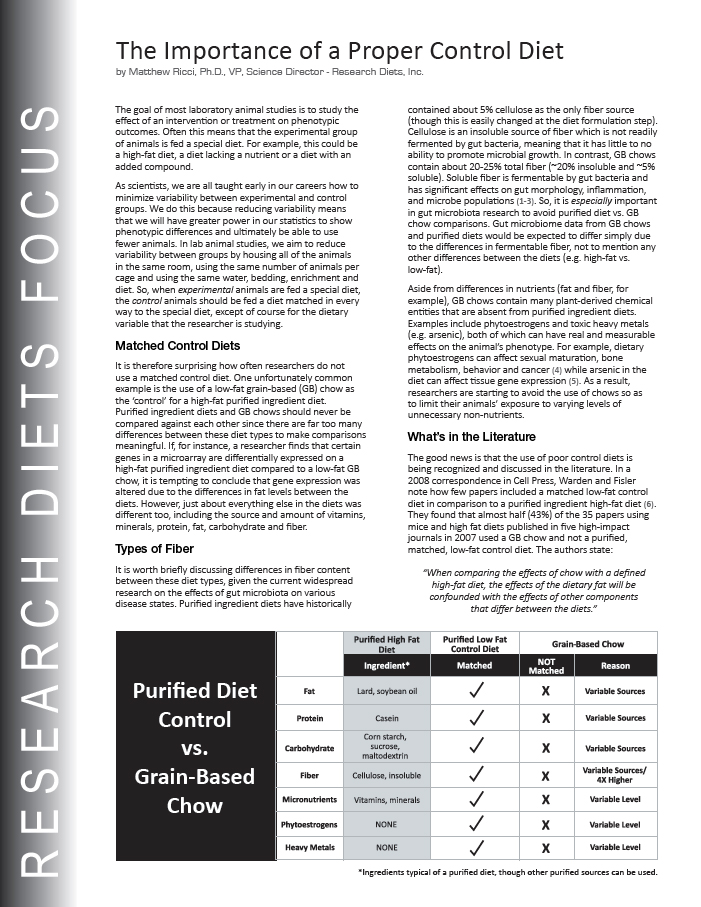
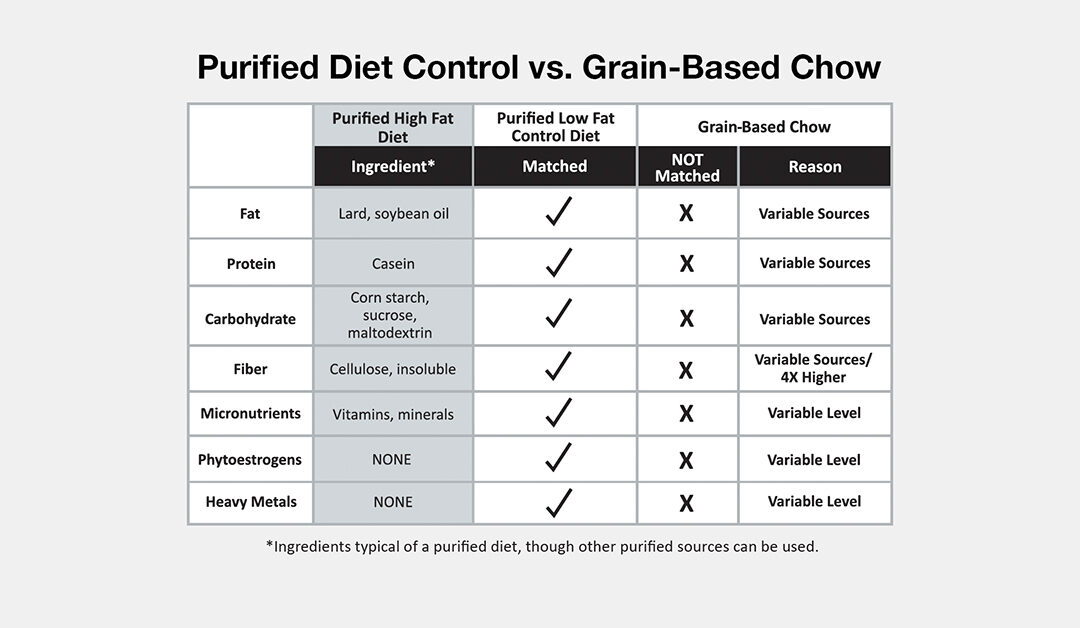
As scientists, we are all taught early in our careers how to minimize variability between experimental and control groups. We do this because reducing variability means that we will have greater power in our statistics to show phenotypic differences and ultimately be able to use fewer animals. In lab animal studies, we aim to reduce variability between groups by housing all of the animals in the same room, using the same number of animals per cage and using the same water, bedding, enrichment and diet. So, when experimental animals are fed a special diet, the control animals should be fed a diet matched in every way to the special diet, except of course for the dietary variable that the researcher is studying.