
Abstract
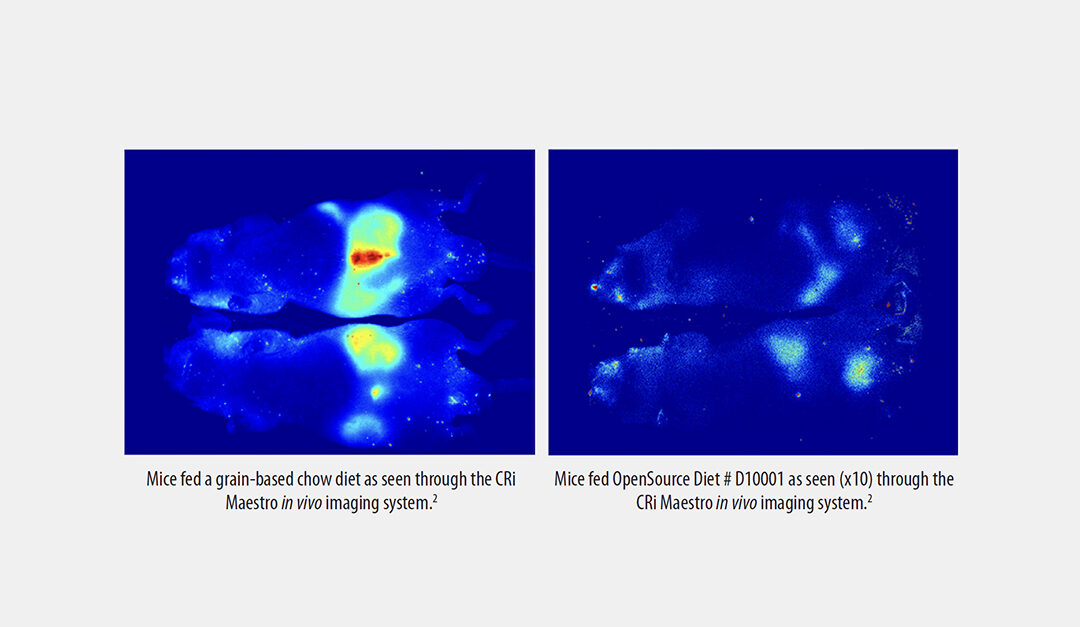
In order to produce high quality in vivo images using fluorescence imaging technologies, it is important to have as low background signal as possible. It has been shown that laboratory animal diets containing chlorophyll fluoresce at 680 nm, which can interfere with the imaging of many common in vivo fluorophores such as GFP or Alexafluor 650 and 680. The confounding fluorescent signal they produce as they pass through the gastrointestinal tract makes quantification of true signal difficult. It appears that unrefined chlorophyll-containing ingredients, particularly alfalfa, are responsible for this ‘noise’.
References
- Levenson RM, Mansfield JR. Spectral imaging in biology and medicine: slices of life. Cytometry A. 2006 Aug;69(8):748–58.
- Bouchard MB, MacLaurin SA, Dwyer PJ, Mansfield J, Levenson R, Krucker T. Technical considerations in longitudinal multispectral small animal molecular imaging. Journal of Biomedical Optics. In press.